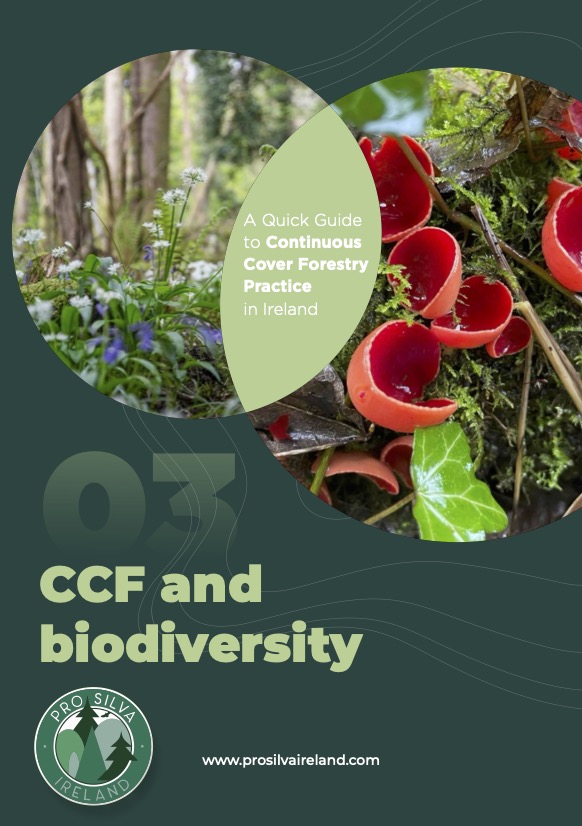
Biodiversity and water

CCF, biodiversity and water

CCF management supports both biodiversity and water quality

The first priority in CCF management is the conservation of ecosystems. The long-term, sustainable production of timber, as we as all the other ecosystem services that forests provide, is dependent on a functioning forest ecosystem. 

By making this the first priority of CCF management, forest conditions are maintained permanently, conserving associated biodiversity and water protection functions. 

 

Key CCF principles

that support biodiversity and water

1

Permanent forest cover

Forest soils are protected from erosion, thereby protecting local watercourses, the forest microclimate persists, forest habitats are conserved and ecological processes continue.

2

Natural forest dynamics

By mimicking the natural formation of canopy gaps, CCF management promotes diverse forest microenvironments, encourages the development of a rich herb layer, and creates a range of habitats for plants and animals.

3

Structural diversity

The multi-layered, uneven structure of a CCF forests creates a diversity of habitat niches that support a range of associated flora and fauna, improves stability and forest resilience, and supports a rich understorey. This in turn slows rainfall, reducing surface runoff.

4

Mix of tree species

A mixed-species forest supports a greater range of associated organisms, is more resistant to pests, diseases and climate pressures, provides varied food sources and nesting habitats supporting insect, animal and aquatic species.

5

Healthy soils

Soils of mixed-species forests are rich in roots and organic matter, which not also support better tree growth, but also absorb and store water, releasing it gradually over time.

6

Greater climate resilience

By maintaining permanent forest cover and species diversity, CCF increases resilience to climate extremes while helping to regulate water, protect watercourses and sustain forest habitats.

resources

Explore further

PDF

Guide 3 CCF and biodiversity

PDF

Guide 4 CCF forests for water