About CCF

Continuous Cover Forestry, resource library

About CCF

A forest management approach that integrates the environmental, social and economic benefits of forestry by maintaining permanent forest cover and working with natural processes.

Continuous Cover Forestry (CCF), also known as close-to-nature forestry, supports the natural growth and renewal of forests through considered management. By using selective felling rather than clear-felling whole forests, it creates space for biodiversity, protects habitats and water, and supports the sustainable production of quality timber. 

Permanent, diverse and resilient CCF forests can meet human needs while enhancing biodiversity and adapting to change.

This resource library introduces the principles and practice of CCF in Ireland — from forest transformation and tree marking to harvesting, biodiversity, available supports and the role of CCF in building climate-resilient forests.

About CCF

Explore CCF in Ireland

A collection of resources covering the principles and practice of continuous cover forestry

What is CCF?

An introduction to the principles of continuous cover forestry management.

FT10-CCF: Resilient forests

An afforestation option designed to establish diverse, resilient, productive forests. 

Transformation in CCF

Converting even-aged plantations into diverse, irregular forests.

Tree marking

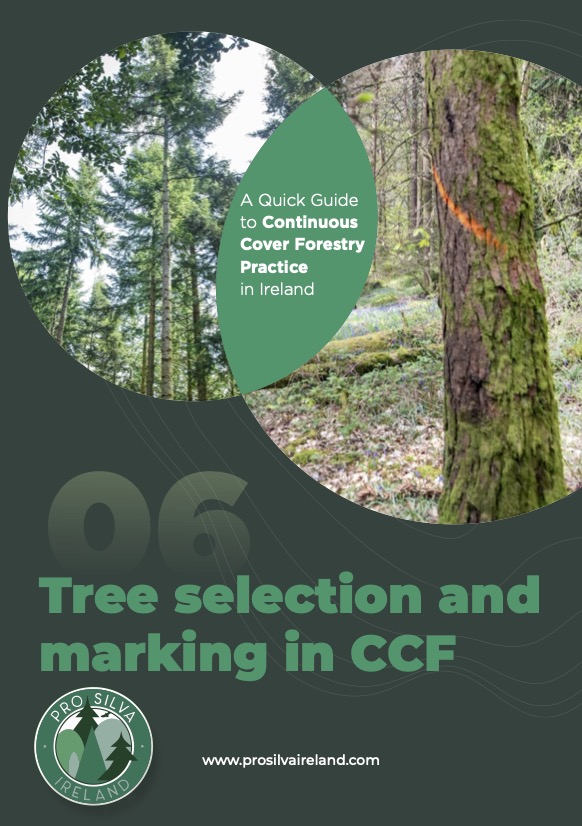
Selecting individual trees for retention and removal.

Harvesting

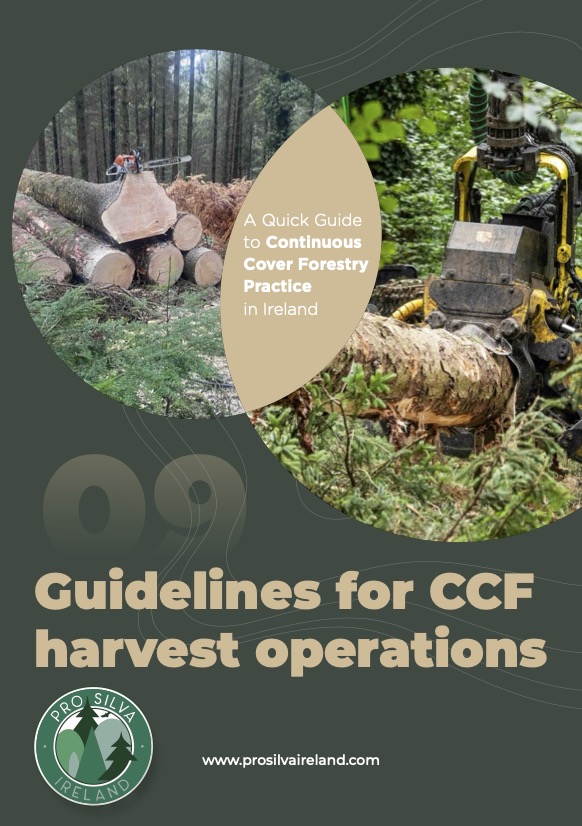
Working under the canopy.

Other CCF operations

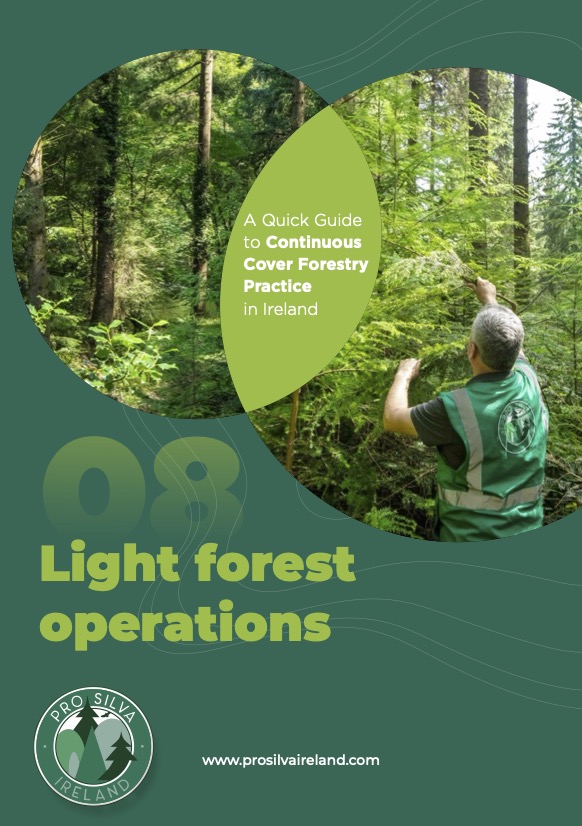
Enrichment planting and light forest operations.

Biodiversity and water

How CCF forests protect habitats, soils and watercourses.

Supports for CCF

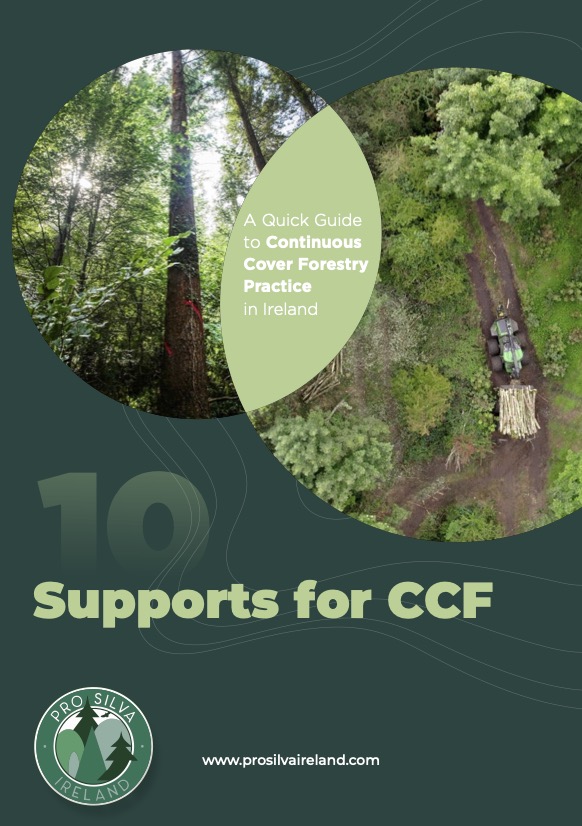
Grants, schemes and resources for CCF forest owners.

Deer

Managing deer impact on natural regeneration.