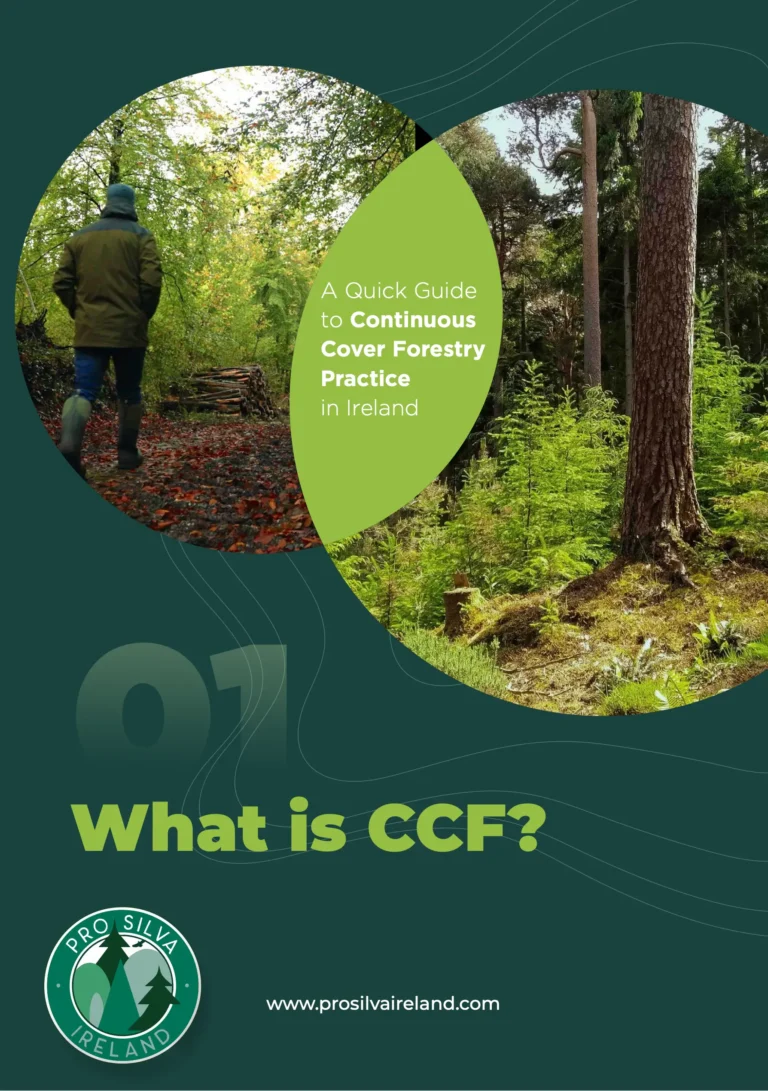
What is CCF?

WHAT IS CCF?

Continuous cover forestry (CCF) is a way of sustainably managing forests for timber production in balance with other forest benefits.

It is an approach to forest management that works with natural processes to produce quality timber, while maintaining and enhancing other forest functions within a permanent forest structure.


It is based on a set of practical and economic principles that are applied to each forest individually.


Management decisions are guided by on-the-ground observation and the assessment of individual trees.

The CCF principles

The principles that underpin CCF management are:

1

Conservation of the forest ecosystem

A functioning forest ecosystem is essential to the long-term sustainable production of timber and to the delivery of the full range of forest functions that benefit society.

2

Protection of soil and climate

CCF management prioritises the protection and enhancement of the natural benefits provided by forests, including healthy soils, clean water, carbon storage and biodiversity.

3

Production of timber and other forest products

The sustainable production of timber and other forest products supports the long-term economic viability of forest land and helps ensure it remains under forest cover into the future.

4

Provision of cultural, recreation and amenity services

Forests are important for physical and mental wellbeing and hold cultural value for communities.

What's in a name?

Continuous cover forestry (CCF)

The term most commonly used in Ireland and emphasises the permanent maintenance of forest cover and forest conditions.

Close(r)-to-nature forest management

The term more commonly used in Europe; highlights the use of natural processes in forest management.

Benefits for the forest

One of the major advantages of CCF is greater FOREST RESILIENCE

Better wind stability

Mixed forests with trees of different ages and sizes cope better with storms. Deep crowns and varied root systems help stabilise the forest compared with a forest of just one species (monoculture).

Reduced impact of pests and diseases

Diseases and insect infestations spread more slowly in mixed forests because susceptible tree species are fewer and more widely spaced across the site.

Improved adaptation to climate change

Different tree species use water, light and nutrients in different ways, helping the forest cope with changing conditions.

Healthier soils

Mixed forests build richer forest soil (humus), supporting strong nutrient cycling and long-term forest health.

Natural regeneration

Young trees grow naturally beneath the canopy, gradually replacing harvested or damaged trees. This continuous regeneration allows the forest to renew itself without large-scale replanting.

Benefits for the owner

CCF can offer a range of economic and practical advantages, particularly over the long term.

More stable and predictable income

Regular harvesting of selected trees provides continuous revenue, avoiding the large swings in income and asset value associated with clear-felling.

Lower costs

Because the forest regenerates naturally, costs for intensive site preparation and replanting are minimised.

Greater flexibility and risk diversification

Managing a mix of species can help spread financial risk and increase resilience to market, climate and biological threats.

Opportunities for additional income streams

Permanent forests can support enterprises such as tourism, non-timber forest products and speciality foliage, adding value beyond timber production.

Long-term legacy value

CCF supports the development of a healthy, resilient forest that can provide sustained income, environmental stability and social benefits for future generations.

Benefits for the environment

CCF forests help protect and restore natural systems.

Permanent habitats for wildlife

The mixed, irregular structure of a CCF forest creates rich habitats for a wide variety of wildlife and biodiversity.

Healthier soils and improved water quality

Diverse tree species and continuous ground cover protect the soil, reduce erosion and help keep streams and rivers clean.

Natural flood management

Permanent forests provide an important protection function by slowing rainfall runoff, stabilising slopes and reducing the risk of floods and soil movement.

Clean air

Trees and forests filter pollutants and produce clean, fresh air year round.

Carbon

CCF can enhance long-term carbon storage in both trees and soil, helping tackle climate change.

Benefits for society

CCF forests contribute to the well-being of communities.

Recreation and wellbeing

Permanent forests offer enjoyable, calming spaces that benefit physical and mental health.

High-quality timber

Continuous forest management supports the production of high-quality timber, providing a reliable source of renewable material for construction and other industries.

Protection of cultural and natural heritage

CCF management respects archaeological features, historic landscapes and natural characteristics.

A richer landscape

Permanent mixed forests add diversity and beauty to the Irish countryside.

As people increasingly value healthy environments, the wide-ranging benefits of CCF forests are becoming more recognised across Ireland.

resources

Explore further

PDF

Guide 1 What is CCF?

PDF

Guide 2 Benefits of CCF

VIDEO

CCF In Ireland: An introduction