WIS-CCF Workshop with Forestry Inspectors – Event Report

Event report

Irish Forest Service inspectors brought their experience and interest to the woods for a full day of continuous cover forestry discussion and learning with Pro Silva Ireland last month.

The stand-out feature of the Woodland Improvement Scheme–Continuous Cover Forestry (WIS-CCF) workshop day was the high level of engagement  from the inspectors and vigorous discussion with Pro Silva Ireland trainers, Manus Crowley and Sean Hoskins, of the technical details of forest transformation.

The one-day workshop took place on Wednesday, 15th October 2025, in Co. Westmeath and was delivered by Pro Silva Ireland (PSI) with support from the Department of Agriculture, Food and the Marine (DAFM).

The workshop is part of the Forestry Skills Training Programme and was designed and delivered by PSI to strengthen inspectors’ understanding of CCF and its practical application under the WIS-CCF scheme.

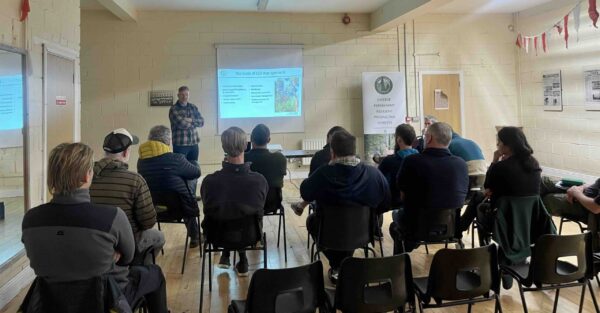
Discussions underway at the WIS-CCF day in Westmeath, 15 Oct 2025

Collaboration and engagement

PSI were particularly pleased to deliver this focused training to members of the Forest Service inspection team, whose work in administering forestry schemes is crucial to ensuring the successful implementation of CCF principles nationwide.

Throughout the day, emphasis was placed on collaboration, discussion and shared learning. Inspectors took the opportunity to engage directly with trainers and peers, exchanging insights from their own professional experience.

The PSI trainers focussed on both the theory and practice behind CCF transformation (the process of changing an even-aged plantation into an irregular high forest) to build on the inspectors’ previous experience in assessing, advising and approving applications to the scheme.

WIS-CCF scheme

The day began with a morning session at the local GAA Club, where participants were welcomed and introduced to the objectives of the WIS-CCF scheme.

Indoor presentations covered CCF principles and terminology, providing an overview of how this approach differs from conventional clear-fell forestry systems.

Trainers discussed the key goals of CCF—maintaining continuous forest cover and the forest ecosystem, promoting structural and species diversity, production of quality timber, and supporting natural regeneration—while also linking these ecological aims with the practical requirements of WIS-CCF grant applications.

A comprehensive overview of the CCF element of the Woodland Improvement Scheme followed, with a focus on the Transformation Management Plan.

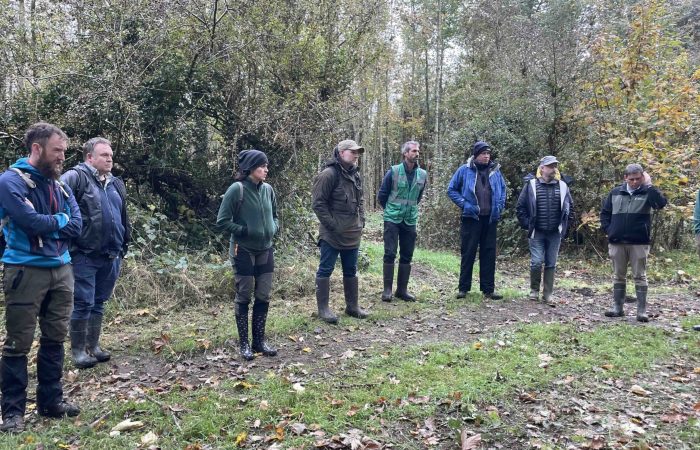
The afternoon session took place in a local forest that is in the WIS-CCF scheme, where the group engaged in practical demonstrations and discussions on forest transformation.

Participants examined a range of interventions supported by the WIS-CCF scheme which are central to CCF practice, including:

  • Infrastructure planning
  • Tree selection and marking
  • Initial and subsequent thinning in conifer and broadleaf stands
  • Underplanting and natural regeneration
  • Deer management
  • Pruning.
 

Particular attention was given to the Pro Silva Ireland Tree Marking Protocol, a practical tool for selecting and retaining quality trees in a CCF context.

Through in-forest discussion and tree marking demonstrations, inspectors gained direct experience in applying these principles, reinforcing how the theory translates into on-the-ground decision-making.

Feedback from participants was highly positive, with many noting the value of combining classroom learning with forest-based demonstration.

The Westmeath workshop successfully strengthened the knowledge base of those administering the scheme and will help ensure that CCF continues to expand as a cornerstone of Ireland’s sustainable forest management strategy.

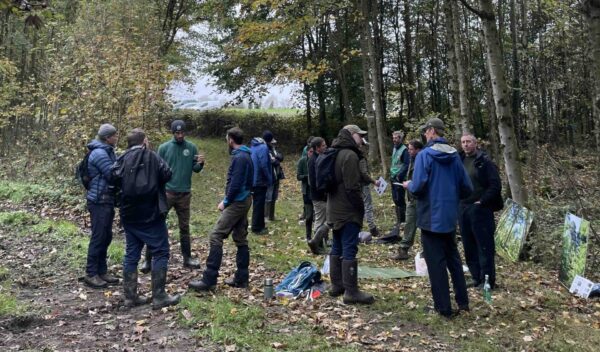
IMG_4347

This event was supported by funding from the Department of Agriculture, Food and the Marine